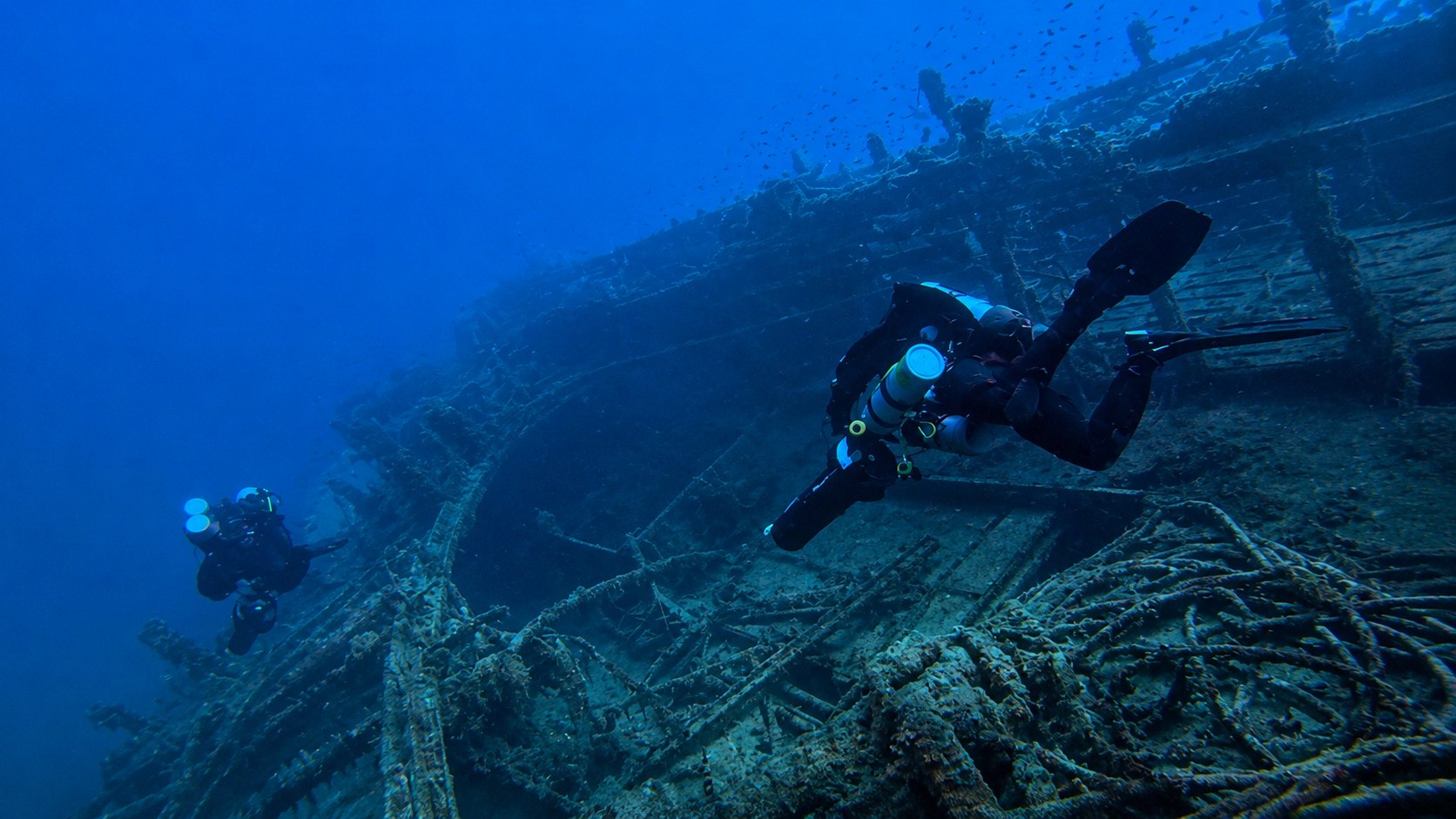
Trimix 75 was written with Malta in mind. The certification takes you to 75 metres, and a striking number of this island's best wrecks sit between 60 and 75. But depth is only half of why people end up doing it — and honestly, it's the less interesting half.
Trimix isn't only about going deeper
This is the bit that gets missed, so I'll put it first.
Trimix isn't just a depth card. It's a clear-head card.
There's a band of diving here — call it the high thirties into the forties — that sits inside what an air-based deco ticket allows, and where a lot of divers arrive on the bottom feeling, let's say, approximate. You get there. You see it. You just don't remember much of it, and you certainly weren't at your sharpest when the plan needed adjusting.
Put helium in the mix and the same dive gets sharper. You notice more. You plan better. You come back up actually able to describe what you saw, rather than nodding vaguely and saying it was lovely.
Plenty of the people I teach trimix to have no intention of ever doing a two-hour decompression dive. They just want a clear head on the wrecks and reefs that a 45-metre ticket doesn't quite reach. That's one of the best reasons to do it, and nobody puts it on a poster.
What Trimix 60 opens up
TDI Trimix Diver takes you to 60 metres, and in Malta that's a proper unlock rather than a nudge.
- HMS Stubborn — 57m, a submarine sitting upright and intact
- Le Polynesien — from 50m, one of the Mediterranean's great wrecks
- The Ju 88s and the Liberator B-24 — aircraft at around 55m
It also makes everything shallower better, which is the part people underestimate. The Um El Faroud at 36m is a different dive with a clear head on it.
What Trimix 75 opens up
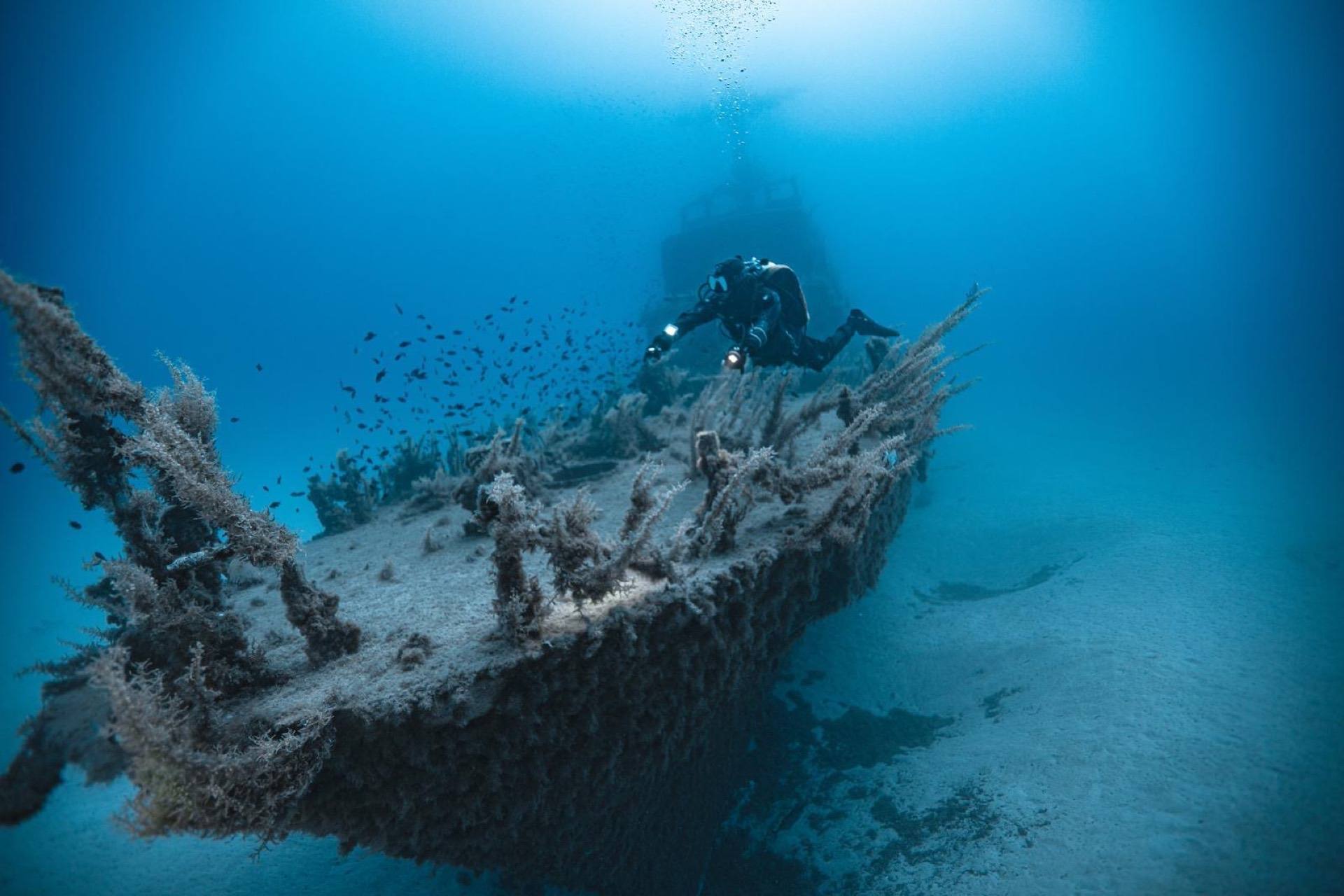
This is the one the island was made for. The densest cluster of intact, historic, genuinely worth-the-effort wrecks in Malta sits in the 60–75 metre band:
- Schnellboot S-31 — 63–68m
- HMS Nasturtium — 67–68m
- HMS Southwold — 67–75m, a Hunt-class destroyer in two sections
- Hawker Hurricane — 70m
Below 60m these are wrecks you look at on a chart. At 75 they're dives you plan properly, with sensible gas and enough bottom time to actually see the thing rather than tick it.
And here's what most people don't realise: the 75m course doesn't sit behind the 60m one. Both are entered from Advanced Nitrox and Decompression Procedures. If the wrecks you've come for are in that band, you can train straight to where they are rather than paying for a stop on the way.
The boat matters more than you'd think
Nobody chooses a course based on the boat. They should.
A 70-metre dive with an hour of decompression is a logistics exercise as much as a diving one, and the difference between a good day and a miserable one is almost entirely about what you're getting back onto.
At Dive Systems the boat was built for this rather than adapted into it:
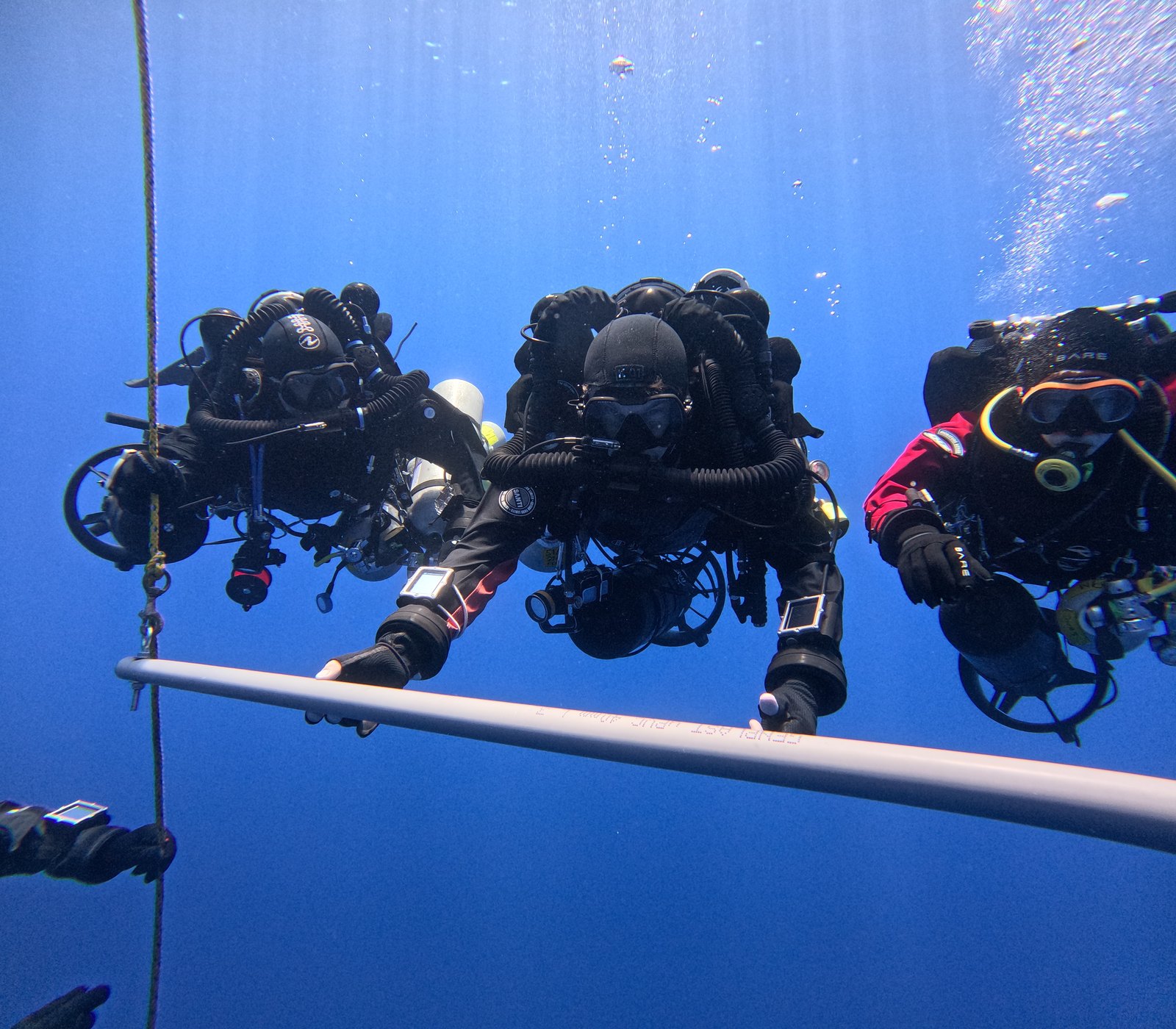
- Decompression rails already rigged — you're not fumbling with a shot line and a jon line while your ceiling ticks down. Hang, relax, do your time properly.
- A diver lift. Nobody is climbing a ladder in a twinset and two stages in 30°C heat.
- Support divers in the water on the bigger dives. Someone is there, in the water, whose entire job is you.
- A serious compressor and fill station — helium, oxygen, nitrox, blended accurately and ready when you are. Nothing kills a training week faster than waiting on gas.
None of that is glamorous. All of it is the difference between doing five good dives in a week and doing three and a half.
Add a scooter
If you want maximum enjoyment out of a week here, get a TDI DPV ticket while you're at it.
Bottom time at 70 metres is expensive. Spending it swimming from one end of a wreck to the other is a waste of good helium. On a scooter you cover the whole thing, then cover it again, and still come up with deco you planned rather than deco you earned by being slow.
It's a short, genuinely fun course, we can usually fit it around the rest of your diving, and I've never once had someone finish it and say they'd rather have swum.
The honest prerequisites
Real requirements, not suggestions — I'd rather you knew before booking flights:
- Trimix Diver (60m) — TDI Advanced Nitrox and Decompression Procedures, 100 logged dives, 18+.
- Trimix Diver 75m — the same entry point: Advanced Nitrox and Decompression Procedures, 100 logged dives, 18+. Five decompression dives on trimix, with at least 110 minutes of accumulated bottom time.
Not there yet? Say so when you get in touch. Sometimes the honest answer is deco procedures or extended range this trip and trimix the next one, and I'd rather tell you that now than on day two.
The short version
Trimix Diver: 60m · 100 dives · Adv Nitrox + Deco Proc
Trimix Diver 75m: 75m · 100 dives · same entry point
Boat: deco rails, diver lift, support divers, on-site helium fills
Worth adding: DPV — more wreck, same gas
Best months: September & October
If you want to see how the whole island maps onto certification levels, I've written that up separately in Malta wrecks by certification level and the best technical wrecks in Malta. Coming from the UK? This one's for you.
Tell me what you're certified to and which wreck is on your list. I'll tell you honestly which course gets you there — and whether it's this trip or the next one.
Get In Touch