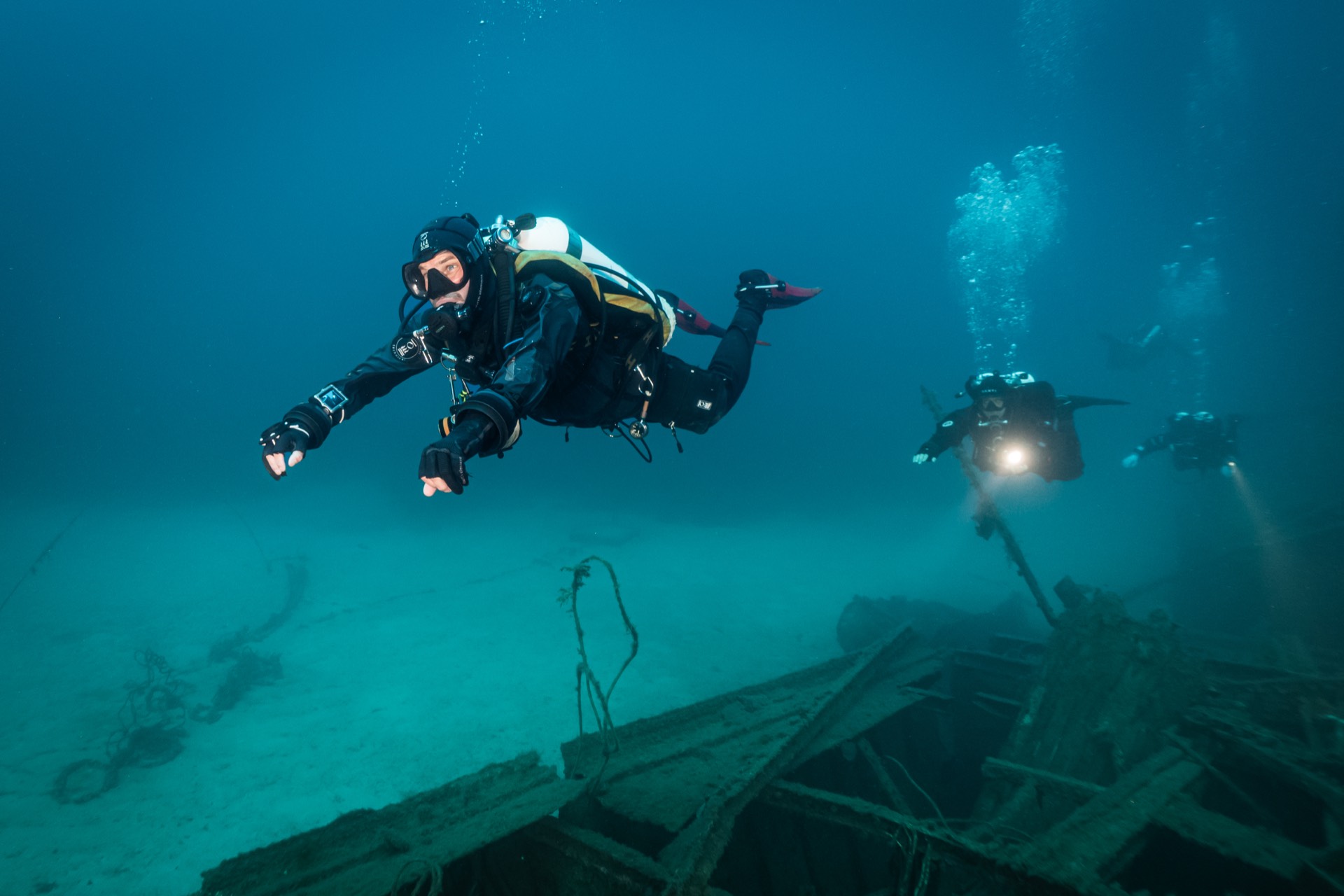
A technical diver's guide to Malta's wrecks — from accessible recreational-depth classics to the deep, protected wrecks most divers never reach.
Malta is, without exaggeration, one of the finest wreck diving destinations on the planet. Warm, clear water with 30+ metre visibility, a concentration of wrecks unmatched almost anywhere, and a history — from the First World War through the siege of Malta and beyond — that has left the seabed scattered with ships, submarines and aircraft.
For technical divers, it's close to perfect. The wrecks sit at every depth, so whatever stage you're at in your training, there's something extraordinary waiting. And the deeper you're qualified to go, the more remarkable it gets.
Here's a guide to the best of them, grouped by the level of training they call for.
Recreational-Depth Wrecks — Accessible & Atmospheric
These sit within reach of a diver with solid recreational or entry-level technical training, and they're where most people fall in love with Maltese wreck diving.
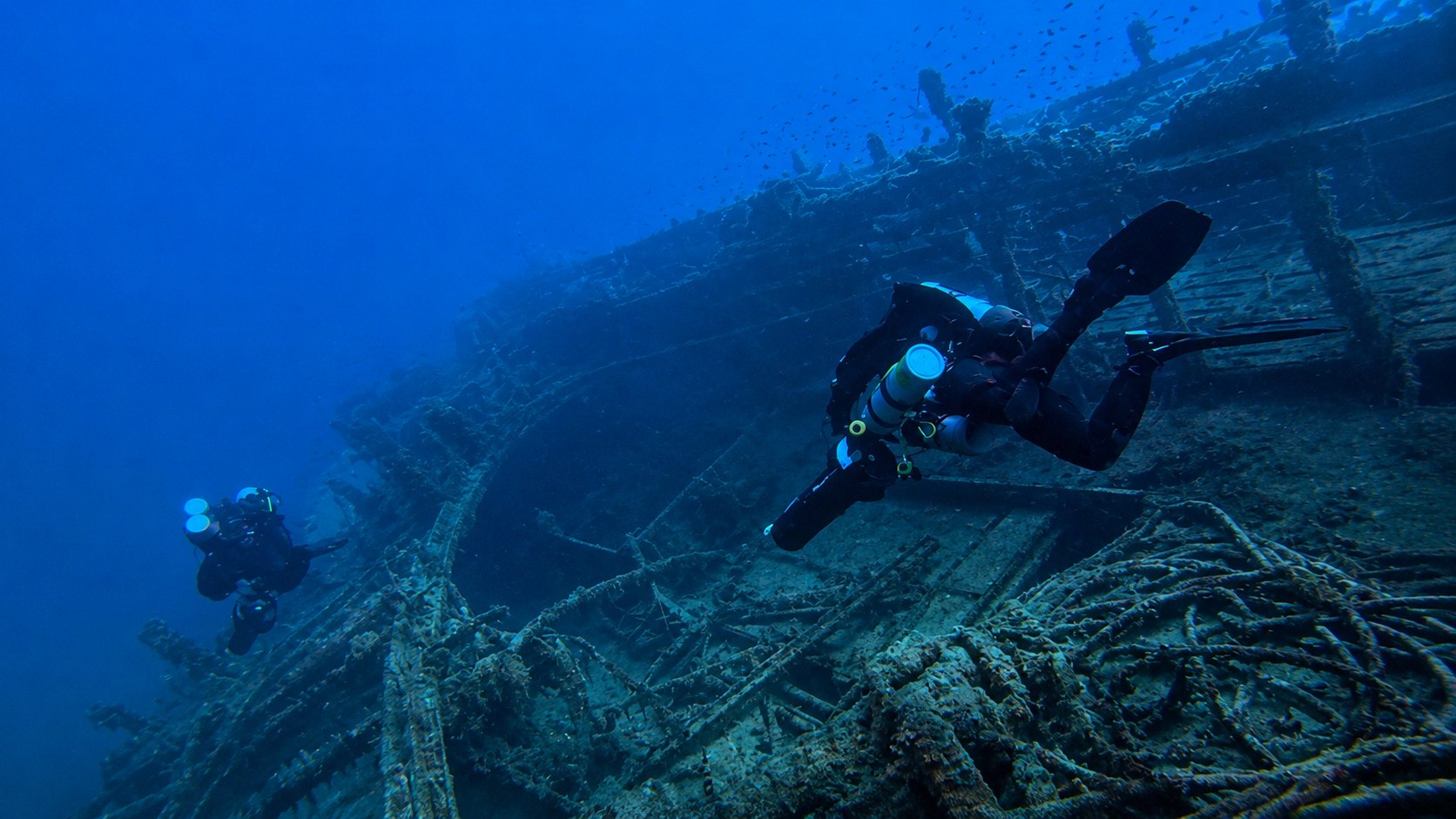
Um El Faroud (36m) — A 115-metre oil tanker scuttled in 1998, lying on her side off Wied iż-Żurrieq. Vast, penetrable and genuinely atmospheric. The perfect wreck to put proper Wreck Diver and Advanced Nitrox skills to work.
P29 & Rozi (34m) — Two purpose-sunk wrecks at Cirkewwa, side by side. The P29 patrol boat sits perfectly upright; the Rozi tugboat beside her is encrusted with life. Two wrecks, one dive.
MV Karwela (45m) — A former Gozo Channel ferry, upright and beautifully preserved. Car decks, engine room and that famous staircase make her one of the best penetration wrecks in the Mediterranean — ideal once you've got Decompression Procedures behind you.
Trimix Territory — The Serious Wrecks Begin
Below 50 metres, air is no longer a responsible option. This is where Trimix Diver certification changes everything — helium in the mix, a clear head at depth, and access to wrecks that genuinely reward the work.
HMS Stubborn (57m) — A WWII S-class submarine scuttled in 1946, sitting intact and upright. Conning tower, torpedo tubes and ballast tanks all distinct. Diving a British submarine from 1942 is something you don't forget.
Le Polynesien (65m) — A French passenger liner sunk by a U-boat in 1918. An enormous, intact hull — propellers, bow and superstructure all present. A genuine trimix landmark dive.
HMS Southwold (73m) — A Hunt-class destroyer mined in 1942 escorting the Operation Pedestal convoy. She lies in two sections, one of Malta's most historically significant deep wrecks — and one that requires Trimix 75 to dive with real bottom time.
Beyond 80 Metres — The Deep, Protected Wrecks
This is the rarefied end of Maltese diving — Advanced Trimix and deep CCR territory. These wrecks are protected, and reaching them requires not just the qualification, but a boat licensed to dive Malta's historic wrecks.
ORP Kujawiak (98m) — A Polish destroyer lost on the same convoy as Southwold. Rarely dived, deeply atmospheric.
HMS Olympus (~120m) — A Royal Navy submarine lost in 1942 with most of her crew aboard. The deepest regularly dived wreck in Malta, and a CCR objective that ranks among the great dives of the world.
The Licence That Makes It Possible
Here's what many divers don't realise: most of Malta's deep and historically significant wrecks are protected sites, and diving them legally requires a boat with a specific historic wrecks permit.
This is one of the many reasons I'm proud to be part of the team at Dive Systems in Sliema. Their boat, SIMO, is licensed for the historic wrecks — so the dives we plan in training are dives we can actually do, on the real wrecks, properly and legally. Add a full trimix and helium fill station on site, and it's about as complete a technical base as Malta offers.
Where to Start
Wherever you are in your diving, there's a Maltese wreck waiting at the edge of your training — and a clear path to the next one. If you want to dive these wrecks properly, get in touch and we'll work out the route that gets you there.
Ready to start diving Malta's wrecks the way they're meant to be dived? Let's talk about the right training pathway for you.
Enquire About Training