Favourites & Recommendations
If you've ever sat in one of my classroom sessions, you'll know I go off on a tangent about some bit of kit, a book, or a course that's genuinely shaped how I dive and teach. And every single time I say "I'll send you the link" — and then, being honest, I usually forget. So here it is: the page I should have made ages ago. A running list of the things that have made me a better instructor, plus the odd bit of gear I just love using. All of it stuff I actually use — no filler, nothing I wouldn't put my own name to.
The Human Diver — Gareth Lock
If I had to point at one thing that changed how I teach, it's this. Gareth Lock took human factors — the science of why well-trained, capable people still make mistakes — and built it into something the diving world had never really had before. Not another skills drill. Not another acronym. A genuine framework for understanding why things go wrong, and what a team can actually do about it before they do.
Here's the bit I keep coming back to, and the bit I talk about constantly in the classroom: ego. Technical diving attracts capable, driven people — and capable, driven people are exactly the ones most likely to talk themselves past a warning sign. The gear doesn't kill divers. The training doesn't fail. It's almost always something quieter than that — pride, pressure, not wanting to be the one who calls the dive. I've watched it nearly happen. I've felt the pull of it myself.
That's the whole philosophy in five words, and it's one I say to every team I brief. Safety isn't the instructor's ego, or the most experienced diver's call — it's the team's eyes, all of them, all the time. A thumb from the newest diver in the group should carry exactly as much weight as one from the most qualified. The moment that stops being true, you've got a human factors problem, not a skills problem — and Gareth's work is where I learned to actually see that, name it, and teach it.
This isn't just theory for me. It's shaped my briefings, my debriefs, how I build teams underwater, and honestly how I think about my own diving. If you lead a team, teach, or just want to understand why good divers still get it wrong sometimes, start here. It's the best money and time I've spent on my own development since I qualified.
The Podcast
"Counter-Errorism in Diving" — Gareth's weekly podcast on human factors and learning from real incidents. My honest starting point for anyone curious.
Listen to the Podcast →The Blog
Genuinely excellent, in-depth writing on incidents, leadership, decision-making and team dynamics underwater. Easy to lose an evening in.
Read the Blog →The Newsletter
Sign up on his site to get the latest thinking, courses and incident write-ups straight to your inbox. No fluff, genuinely worth reading.
Join the Mailing List →There's a proper pathway here too — from free reading and listening right through to in-person Applied Skills training and beyond. Wherever you are with it, there's a sensible next step.
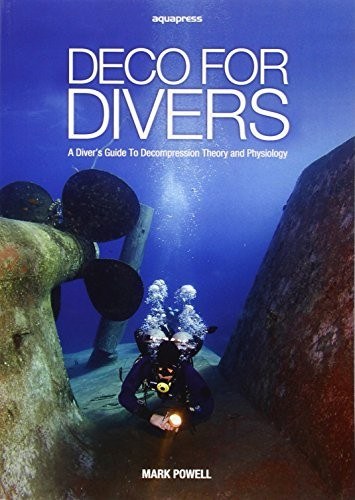
Deco for Divers — Mark Powell
I was lucky enough to have Mark as my own TDI Instructor Trainer, and this book is still one of the best on the market. It goes genuinely in-depth on decompression theory and physiology — everything you'd want to know as a diver interested in deco, or honestly just anyone who wants to understand what's actually going on in our bodies when we head underwater. If you read one book on decompression, make it this one.
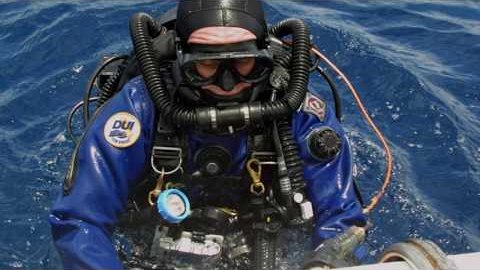
Decompression Controversies
Simon Mitchell explaining gradient factors in a way anyone can actually understand. This is the video that helped me get my head around it when I was starting out — and it's still brilliant today. If GFs have ever felt like witchcraft, watch this.
Watch on YouTube →
Deep Stops — & a Modern Rethink
Mark Powell on deep stops and much more — and what makes this one really interesting is that he talks openly about how his own thinking has changed and what he'd update. A genuinely modern take from someone who's spent his career on this stuff.
Watch on YouTube →270Pro PURE Anti-Fog Film
I put this through two months of hard everyday use — including a backup mask battered in my pocket by bolt snaps — and it's earned a permanent place on my masks. A precision-cut film that stops your mask fogging, protects tinted lenses from scratches, and just works. I wrote up the full honest verdict on the blog if you want the detail before you buy.
I'm always finding — or being reminded of — kit, books and training worth passing on. Check back, or if there's something you've heard me rave about that isn't here yet, give me a nudge and I'll add it.