Wreck · 98–100m / 322-328ft
ORP Kujawiak
One of the dive sites we run here in Malta — here's the story behind it, the depth and access, and what it takes to dive it properly.
One of the dive sites we run here in Malta — here's the story behind it, the depth and access, and what it takes to dive it properly.
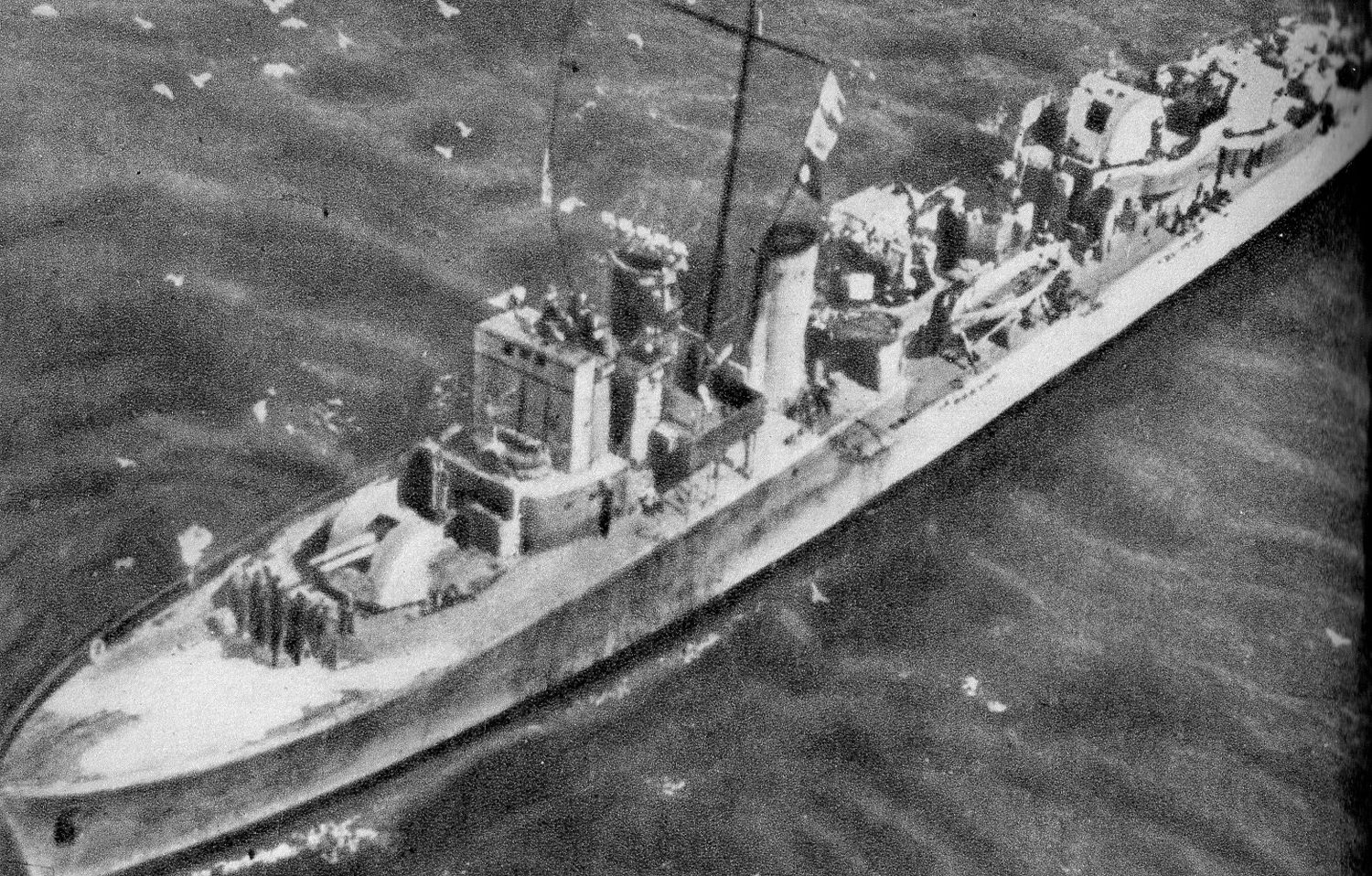
Originally HMS Oakley (L72), this Hunt-class (Type II) escort destroyer was built by Vickers-Armstrongs and launched on 30 October 1940 — about 85m long, 9.5m beam, crew of 168. She was transferred to the Polish Navy in 1941 and renamed ORP Kujawiak. Her combat career was brief: in June 1942 she joined Force X at Gibraltar for Operation Harpoon, escorting a relief convoy to besieged Malta. In the early hours of 16 June 1942, as the convoy neared Grand Harbour and another ship struck a minefield, Kujawiak hit a mine on her port side while moving to help. She listed heavily and sank within thirty minutes at 01:20, with the loss of 13 Polish servicemen. She came to rest several kilometres east of Valletta at about 100m, her stern buckled on impact. The wreck lay undiscovered until a Polish expedition found her on 22 September 2014; designated a war grave, she opened to permitted divers on 1 May 2019 under Heritage Malta. She lies on her port side, stern to north, in good condition apart from the impact damage, rich with marine life including lobsters — a demanding deep technical dive with limited bottom time.
ORP Kujawiak is a war grave and a protected site under Heritage Malta — dive permits are required and the wreck is managed to preserve its integrity. She lies on her port side at around 100m, roughly 85m long, several kilometres east of Valletta. The scale becomes apparent as you descend: at 80m she's already enormous — a Hunt-class escort destroyer with her full armament still in place, torpedo tubes visible, the bridge largely intact.
At 100m on open circuit, bottom time is measured in single-digit minutes after decompression obligations are factored in. This is strictly an Advanced Trimix or CCR dive — the kind of dive you plan for hours and execute over 5–10 minutes on the bottom with well over an hour of decompression. The briefing covers bailout procedures, lost-buddy protocols and hard abort criteria before the anchor line goes down. On CCR the calculus is different: 20–25 minutes of meaningful bottom time is achievable, but the complexity of gas management at this depth means the preparation is still intense.
The wreck is rich with marine life, as deep undisturbed sites always are — large grouper, conger eels, extensive soft coral. The visibility tends to be excellent (the deep water around Malta is very clear) and on a good day you can see most of the hull from a single vantage point. This is the objective for serious Advanced Trimix divers — one of the most significant WWII wrecks in the Mediterranean, accessible only to those who've put in the work to get there.
The diving here suits divers at Advanced Trimix level. If you’re not there yet, these are the courses that get you there:
Already certified and just want to dive it? Come and explore it with me on open circuit or CCR — one relaxed dive a day, no rushing, as long in the water as you like.
Want to dive ORP Kujawiak? Tell me your certification level and your dates, and I'll plan it with you. No pressure, no hard sell — just a good dive.