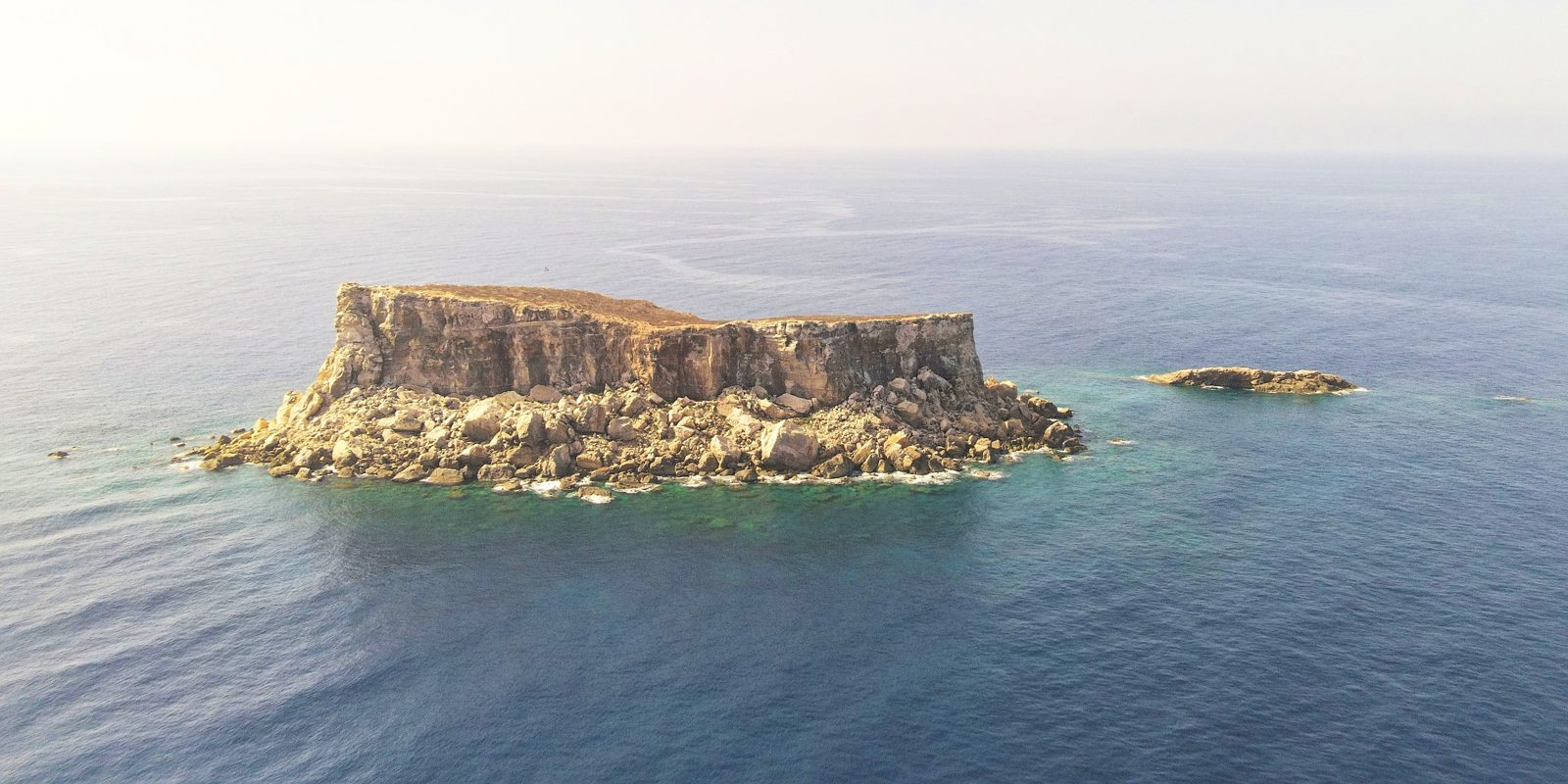
A protected nature reserve off Malta's south coast, opened to divers only three times a year under strict permit — and Dive Systems has secured every one of them. Here's the story, the depth, and what it takes to actually get on this dive.
The islet of Filfla, off Malta's south coast.Photo: Godmus (CC BY-SA 4.0), via Wikimedia Commons
The Site
Filfla is the tiny uninhabited islet off Malta's south coast — a protected nature reserve, so access is restricted and it's strictly a boat dive on the right day. Beneath the surface, boulders and walls drop into clear, deep water with an untouched, remote character you won't find at the busier sites. Because so few people get to dive it, it's barely touched — a special one when conditions and permissions allow.
The approach — Filfla from the boat, on one of this year's three permitted days.
Permits — Only Three Days a Year
Filfla isn't a site you can just book. It sits inside a protected nature reserve, so diving it at all depends on a permit from the authorities — and only a handful are ever issued. In practice that means the island is open to divers on around three days a year, no more.
Dive Systems has secured the permit for all three occasions every year, so if it's being dived in Malta, we're the ones doing it. Spaces on the boat are limited and the trips sell out fast once a date is confirmed — keep an eye on the Dive Systems Facebook page for the announcement, because dates aren't fixed year to year and there's no waiting list once it's full.
In the water at the base of the cliffs, moments before dropping in.
What to Expect
I dived it myself this year, and it's every bit the site its reputation suggests. The visibility was some of the best I've had in Malta — Filfla sits well offshore with none of the boat and shore traffic that stirs up the busier sites, and it shows the moment you drop in.
Rays were the highlight. We found several resting on the sand and gravel patches between the boulders, completely undisturbed — exactly what you'd expect from a reef that only sees divers a few days a year.
It's an exposed position, though, and currents can run strong here. This isn't a site to underestimate: proper buoyancy, gas planning and a briefing that accounts for the current are all part of diving it properly, and it's exactly why the boat and the guiding matter as much as the permit does. As with any protected marine reserve, nothing gets touched or taken — we're guests here, and that's the whole reason it still looks like this.
One of several rays we found this year, resting on the sand between the boulders.
Train for This Dive
Good news: the main dive at Filfla is well within reach of Advanced Open Water divers — no technical certification needed to enjoy it, permit allowing. If you want to follow the wall down deeper, toward 50m, that's where trimix training opens things up further:
Already certified and just want to dive it? Come and explore it with me on open circuit or CCR — one relaxed dive a day, no rushing, as long in the water as you like, permit days only.
Want to dive Filfla Island? Tell me your certification level now, and I'll make sure you're on the list the moment Dive Systems confirms next year's permit dates. No pressure, no hard sell — just a good dive, three days a year.