Training · As a Team
GroupCourses
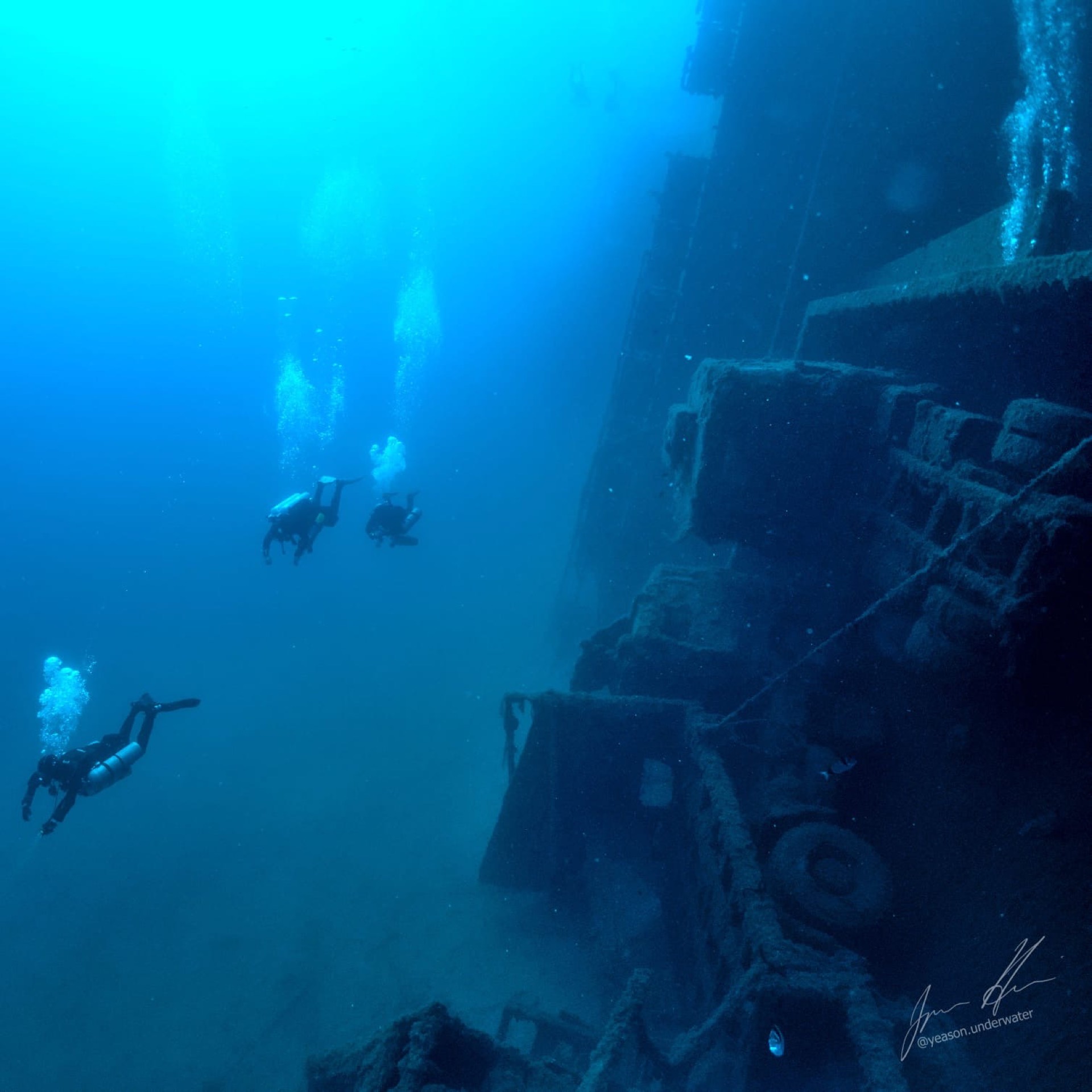
Technical diving is a team sport — so it makes sense to learn it as one. Bring your dive buddies, train together, and step up as a team. Pick the course, tell me who's coming, and the price reflects the group.
Technical diving is a team sport — so it makes sense to learn it as one. Bring your dive buddies, train together, and step up as a team. Pick the course, tell me who's coming, and the price reflects the group.
Almost everything in technical diving is done as a team — gas planning, briefings, problem-solving, watching each other's backs at depth. So there's real value in learning it together rather than separately. Maybe you've already got a dive team and you want to take the next step as a unit; maybe you're a few mates who've decided it's time to get serious. Either way, training together means you finish as a team that's genuinely worked together, not a group of individuals who happen to hold the same card.
You'll learn from each other as much as from me. Watching a teammate work through a skill, debriefing a dive together, sharing the small wins and the occasional cock-ups — that's where a lot of the real learning happens, and it's a lot more fun than going it alone.
I cap course groups deliberately. My strong preference is no more than three divers on a course — small enough that everyone gets proper attention, plenty of water time, and a course that actually moves at the right pace for the people on it.
Bigger groups are absolutely possible — but rather than water down the experience, my brilliant colleagues and I split larger groups into small teams and run them alongside each other. You still travel, dive and progress together as one big group; you just get the focused, small-team training that makes the learning stick. Nobody's standing around on the boat waiting their turn.
Group training is priced per group, so it usually works out better per person than training solo — the more of you there are, the more that shows in the price. Tell me your numbers and I'll put a proper quote together.
And if the team fancies some fun dives around the course, some of the best ones here — like linking all four of Gozo's wrecks (the MV Hephaestus, Cominoland, MV Karwela and MV Xlendi) together in a single dive — are best on a DPV. If anyone's not DPV certified, no worries: it's a light, genuinely fun DPV course we can usually sort on day one, and it won't take anything away from your training.