What This Course Is
The SDI Solo Diver course builds the skills, equipment redundancy and self-reliance that every experienced diver benefits from — whether you're diving alone by choice or simply want to be genuinely self-sufficient underwater. Dive professionals, underwater photographers, and experienced divers who travel independently all rely on these skills. This course gives you the training to do it properly and confidently.
Being a capable solo diver also makes you a significantly better buddy diver. A diver who is truly self-reliant isn't depending on their partner to manage their problems — they bring real capability to the team. The skills developed in this course improve every dive you do, regardless of whether you're alone or with others.
The 100-dive prerequisite exists because the course genuinely lands differently when you've got real experience behind you. The self-reliance skills make more sense, the risk assessment feels more natural, and the whole thing is more useful to you. If you're not quite there yet, keep diving and come back — you'll get considerably more out of it.
We'll cover redundant equipment systems — redundant buoyancy, redundant cutting tools, redundant air supply options, surface marker buoy deployment — and the planning, assessment and abort discipline that makes solo diving genuinely safe rather than just optimistic. There's a real mental discipline element here too: without a buddy to sanity-check your decisions, your internal decision-making process needs to be robust and honest. We work on that.
Malta is a good place for this course because the dive sites are well-documented, the visibility is generally excellent, and the conditions are manageable. For a solo diver, site familiarity and predictable conditions are factors in your risk assessment — and we use that throughout the course.
What You'll Cover
- Self-reliance philosophy — risk assessment without a buddy, honest self-evaluation, when solo diving is and isn't appropriate
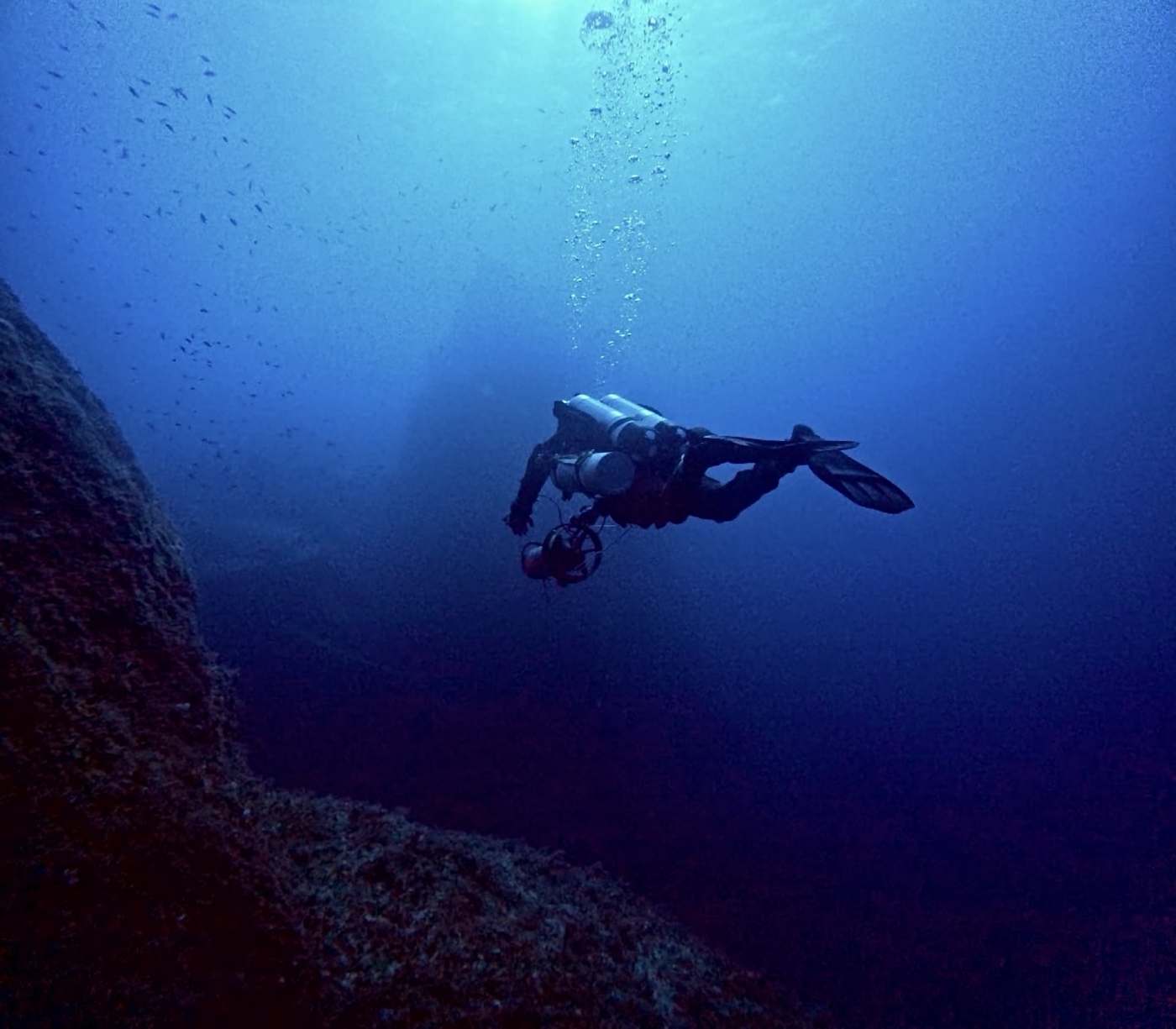
- Redundant equipment — backup buoyancy, redundant cutting devices, redundant surface signalling, air supply redundancy
- Emergency procedures without a buddy — self-rescue, self-rescue ascent, deploying an SMB solo, managing equipment failures alone
- Dive planning for solo diving — conservative gas planning, abort criteria, surface cover requirements, logged dive plans
- Situational awareness — monitoring your own status without a buddy to notice if something's wrong, managing task loading solo
- Post-dive protocols — surface procedures, communication, ensuring someone knows where you are and when you should be back
What You Need Beforehand
- Advanced Open Water or equivalent
- Minimum 100 logged dives — the experience genuinely makes a difference to what you'll get out of it
- Age 21+
- If you've had a bit of a gap, no worries — a few refresher dives beforehand will set you up well and you'll get a lot more from the course.
This course is particularly relevant if you dive professionally, travel solo, work in underwater photography or videography, or simply want to understand what genuine self-sufficiency in diving looks like. It's also one of the most intellectually interesting courses I teach.
What It Opens Up
Solo Diver certification gives you the formal recognition and training framework for solo diving. More practically, the self-reliance skills developed here improve your buddy diving and make you a more competent, confident diver in all contexts. There's no formal next step — this is a complete standalone qualification that enhances everything else you do underwater.