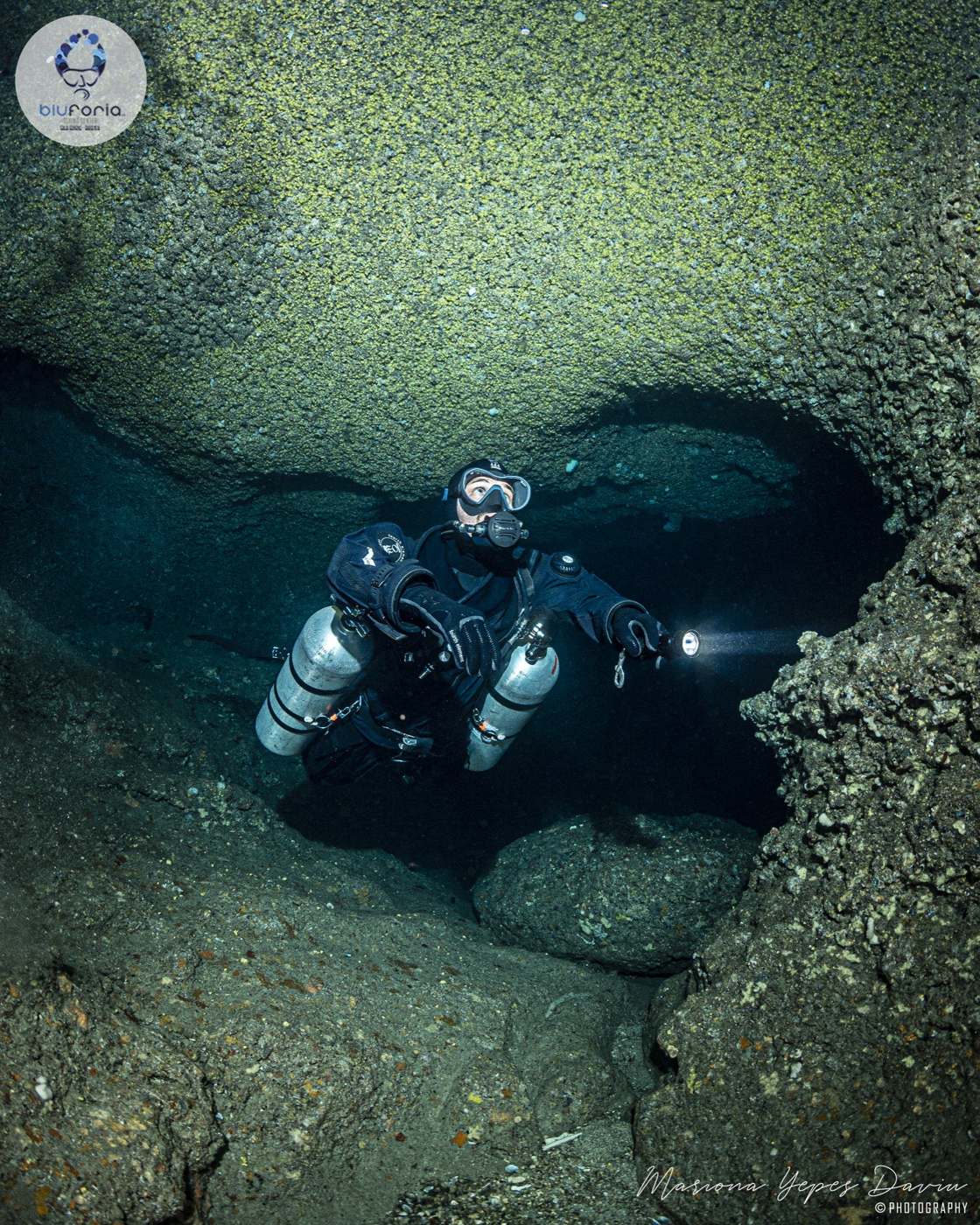
What This Course Is
Sidemount diving is one of the most versatile and capable configurations in diving — offering a lower profile for overhead environments, complete cylinder independence for redundancy, and a streamlined, comfortable setup that many divers consider the most natural way to dive once they've made the switch. This course gets you there properly, with the skills and configuration knowledge to make the most of it from day one.
The primary advantage is profile. Lying flat underwater with two cylinders along your sides, you are significantly lower profile than with a twin-set on your back. For overhead environments — wreck penetrations, the Inland Sea tunnel at Dwejra, tight passages — that matters. The secondary advantage is redundancy: two independent cylinders with two independent first stages. If one fails, you switch to the other. Simple, reliable, elegant.
The Inland Sea at Dwejra is one of Malta's most iconic dive sites — a lagoon connected to the open Mediterranean by a 90-metre tunnel that's enclosed, current-affected, and genuinely spectacular. Sidemount makes that dive more comfortable and provides better access to the tunnel walls. We put it to use on the course.
Sidemount takes longer to feel natural than backmount — the buoyancy and trim picture is different because weight distribution and buoyancy sources are in different positions. Most divers spend the first day adjusting to the configuration, and by the end of the course it starts to feel like the obvious way to dive. The adjustment is worth it, and the course is structured to take you through it methodically.
Whether you want sidemount for wreck penetration, for comfort on long dives, or just because you fancy trying it — this course will get you there properly.
What You'll Cover
- Sidemount equipment setup — harness fitting, cylinder attachment, bungee routing, first stage configuration. Getting this right is everything
- Buoyancy and trim in sidemount — why it's different from backmount, how to find neutral trim with cylinders at your sides
- Gas management — alternating between cylinders, tracking pressure across two cylinders, managing independent systems
- Valve drills in sidemount — shutting and isolating cylinders, managing failures, gas donation with sidemount cylinders
- Overhead environment considerations — how sidemount changes the profile calculation, when and why it's advantageous
- Moving underwater in sidemount — finning techniques, positioning, navigating tight passages without damaging the reef or yourself
What You Need Beforehand
- Open Water certification
- Minimum 25 logged dives
- Age 18+
- Reasonable buoyancy — not technical-diver level, but you need to be past the stage of fighting to stay at depth
If you're interested in sidemount as a pathway to technical diving rather than just recreational use, we can structure the course to bridge toward the technical curriculum. Say so when you enquire and I'll tailor the programme accordingly.
What It Opens Up
Sidemount certification opens overhead environments that are awkward or inaccessible with backmount gear. In Malta specifically, it transforms sites like the Inland Sea tunnel from "something you swim past" into a proper dive. For the technically-inclined, it's an excellent foundation for Decompression Procedures training — the independent cylinder management translates directly.