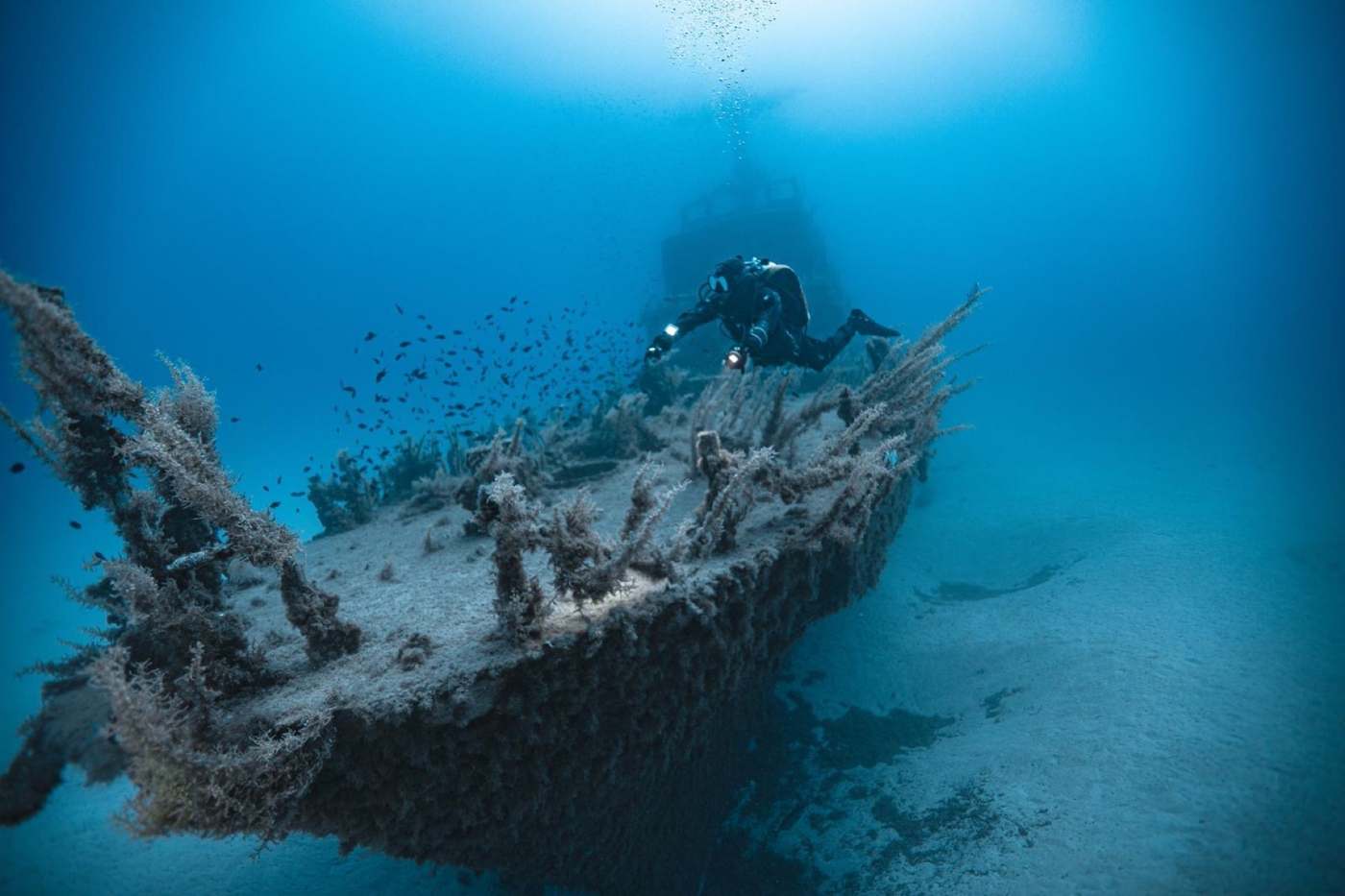
What This Course Is
The TDI Intro to Tech course is where your journey into technical diving begins — and it's one of the most rewarding two days you'll spend in the water. This is the course that transforms how you dive: precision buoyancy, perfect trim, twin-set handling, and the self-reliance skills that underpin everything in technical diving.
Two days in Malta's crystal clear Mediterranean water, with 30+ metre visibility, gives you an extraordinary environment to train in. You'll see every improvement in real time, feel the difference in your control, and finish the course with a genuinely different level of underwater ability. The skills you build here — hovering motionless, valve drills, gas sharing, controlled ascents — are the foundation every serious technical diver is built on.
By the end of this course you'll understand why technical divers configure their equipment the way they do, how to manage a twin-set with confidence, and what it genuinely means to be self-sufficient underwater. This is the course that makes every dive you do after it feel more controlled, more capable, and more enjoyable. It's two days that will stay with you.
What You'll Cover
- Buoyancy and trim — the non-negotiables. Horizontal trim, controlled ascents and descents, hovering without finning. Done properly, not just adequately
- Equipment configuration — twin-set setup, valve drills, understanding why everything is where it is
- Redundancy principles — what redundant systems actually mean and why they matter
- Gas management — the rule of thirds introduced and applied underwater
- Out-of-gas procedures — donating and receiving gas, swimming out of a problem as a team
- Technical diver mindset — planning, briefing, abort criteria, discipline. The difference between a technical diver and an advanced recreational one isn't just certification level
What You Need Beforehand
- Advanced Open Water or equivalent — you need to be comfortable underwater, not still figuring out the basics
- Minimum 25 logged dives
- Age 18+
- Honestly? Just be willing to hear feedback and work on it. That's all I ask.
The P29 and Rozi sit in about 34m of water off Cirkewwa — perfect depth for intro-level technical diving. The Um El Faroud off Wied iż-Żurrieq sits shallower on top and gives you a proper wreck experience without going beyond your training. These are the sites we'll use.
What It Opens Up
Completing Intro to Tech properly sets you up for the Advanced Nitrox course — the next step on the technical pathway. More importantly, it means that when you get to decompression diving, you're not fighting your buoyancy and your kit at the same time as learning deco theory. The groundwork you lay here pays dividends for the rest of your technical diving career.